

What Financial Scarcity Actually Does to Your Brain (And Why I'm Talking About It)
On money, fear, the audit score I wasn't surprised by, and the resources that have genuinely helped me

There’s a statistic I keep coming back to, and it’s one of those things that once you know it you can’t unknow it:
When we’re experiencing financial scarcity, our cognitive function drops by the equivalent of about 13 IQ points.
Not metaphorically, not “we feel less sharp”, but measurably, demonstrably less capable of good decision-making.
And then, because the decisions we make from that diminished place tend to be worse, the situation we’re trying to escape from often gets harder. It becomes self-reinforcing in the most brutal way.
Psychologists call one part of this the ‘tunneling effect’. For example when money fear is acute, we get so focused on solving the immediate discomfort that we lose sight of anything longer-term.
As entrepreneurs this can look like having a sale, then another sale, then building a new offer, then pivoting, then scrambling, making move after reactive move trying to get out from under the present pressure while quietly making the future harder to navigate.
Woooo have I been there.
I know exactly what that feels like from the inside, and knowing the name for it doesn’t make it much easier to resist.
In this episode of the Joy First podcast, we’re reviewing the Security category of the Joy First Audit. And right now, this is where my lowest score sits: 9/20.
Before I share what I’m doing about it, I want to say the uncomfortable thing out loud: this isn’t just about the numbers. It never really is.
Where the scarcity started
My relationship with financial scarcity started early and it started dramatically. I dropped out of college with only a couple terms to go, because I couldn’t afford to continue.
I started a photography business, and within the first year had all my equipment stolen from my boyfriend’s car.
That was it. That was everything I had to start a business and a life.
Then, as I stepped into starting my business, I had a deal go badly wrong… we got a $50,000 loan (secured against my biz partner’s house), to invest in products from a company that was supposed to supply us for branded retail alongside my studio, but the product never came.
We opened our doors to an empty shop and spent the next four years in a lawsuit while simultaneously trying to pay rent, legal fees, loan repayments, and you know, live.
I was choosing between printer ink for client work and food. The dog ate first, obviously. Then the clients. Then me, when there was anything left.
I burned out twice before I was 30.
And even when things got better (and they did get better, significantly better), those years left patterns that have followed me in new and increasingly sophisticated forms ever since. That’s the thing about scarcity conditioning: You can do the work, see the abundance, feel secure, and then feel any wobble at all and watch the old responses surface like they never left.
2024 was a good year for me. I made some investments off the back of that and some of them didn’t pan out.
I over-invested in team.
I added 15,000 people to my email list through ads that I later discovered was full of spam accounts, which tanked my deliverability. This meant the data I was looking at was telling me things were working when they weren’t quite, and everything felt slightly broken in ways that were hard to diagnose.
Last year was really hard for a lot of business owners, and I was one of them.
So right now I’m in what I’d call a rebuild stage.
I’ve cleared out my savings, taken on debt I’d rather not have, let go of team and support systems and luxuries (and travel budget 😭😭😭 ), reduced my salary, started actually tracking spending in a way I haven’t had to do for a long time.
I’m navigating all of this while also dealing with perimenopause symptoms that require real investment in self-care, while looking for a therapist to help me process a recent neurodivergence diagnosis, while trying to build low-ticket scalable offers because all of my current revenue requires me to generate it actively every single month.
It is a lot of plates to spin... and I’m guessing you can relate!
When I took the Security audit and got 9/20, the report told me I was “under-resourced” and that “financial safety feels fragile, with overwork and money pressure quietly driving decisions.”
That definitely landed.
Because some of it is the reality and some of it is the old fear patterns recognizing a wobble and deciding it’s 2005 again, even though it very much isn’t.
The Security Audit
The questions in this section of the audit cover things you’d expect (can you pay your bills without panic, do you have a savings buffer, does your debt feel manageable) but also things that feel more spacious and harder to answer honestly:
Can you make decisions based on joy rather than money fear?
Do you have control over your schedule?
Can you take time off when you actually need to?
That last cluster matters because for entrepreneurs especially, financial security and freedom are so deeply tangled together.
A lot of us left corporate life or avoided it entirely precisely because we wanted both, and the discovery that they can work against each other (more freedom often meaning less predictability, which means less security, which means more fear) is something nobody really prepares you for.
The feast and famine cycle of service-based business is real, and it does something devistating to your nervous system when you live inside it for any length of time.
Some Resources
I want to share three women whose work has genuinely helped me navigate this, at different stages and in different ways.
Money Mindset
The first is Denise DT (Denise Duffield-Thomas), whose book “Get Rich, Lucky Bitch” gave me language I didn’t have before for what was actually happening in my relationship with money.
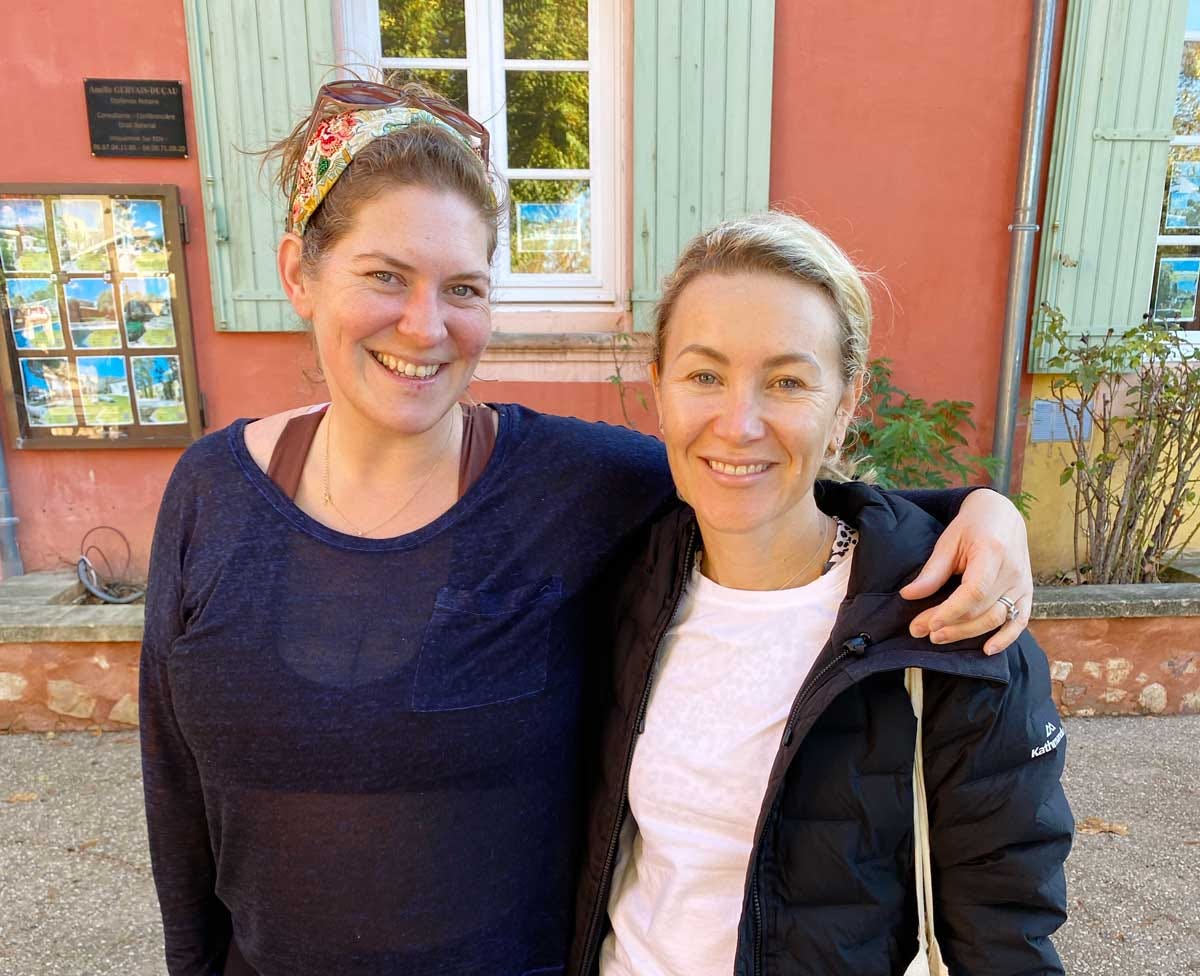
She works a lot with the concept of money blocks, the unconscious patterns and beliefs we carry that shape our financial behavior in ways we often can’t see clearly. I read her book in 2015 during one of my lowest points and then built a six-figure business in less than nine months. I’m not saying it was magic, but I am saying the inner work and the outer results were not unconnected. Her money bootcamp program takes it further and her community is genuinely warm.
She’s someone worth following. She’s now a good friend of mine, and I still get inspired by her often. Here are a couple of podcasts I’ve recorded with her over the years:
Practical Wealth Building
The second is Ann Wilson, who wrote “The Wealth Chef”: She takes things to a more pragmatic level.
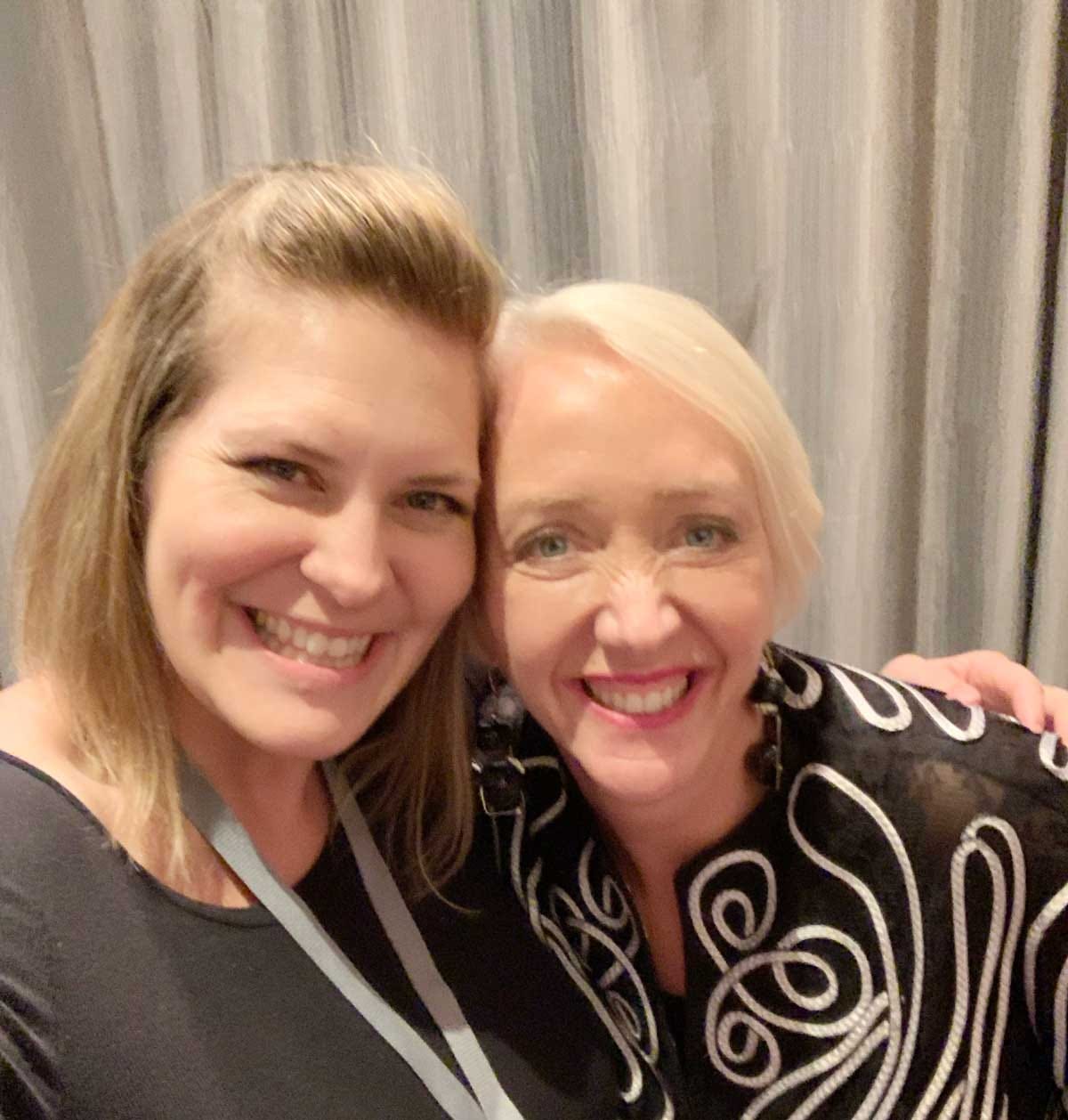
Where Denise is warm and energetic and deeply interested in the emotional and spiritual roots of your money story, Ann is focused on the practical scaffolding: how to pay off debt intentionally, how to start investing, what financial structures you actually need.
They work brilliantly together as a one-two. Get the emotional roots sorted with Denise, then use Ann’s framework to build something real on top of it.
The Energetics of Money
The third is Catherine Morgan, whose podcast (It’s Not About the Money) is consistently in the top five percent globally and whose book of the same name is worth reading slowly. Catherine bridges both worlds in a way that I find particularly useful because she’s a qualified financial advisor who has also done deep work in somatic and coaching modalities, including EFT.
She understands that you can know exactly what you should do with money and still find yourself unable to do it, and she’s built her practice around helping people understand why and move through it. She’s another one of my good friends, based in the UK, she’s brilliant, and I can’t recommend her enough.
The Hardest Part: Fear
The thing I keep coming back to with all of this is that the fear is usually the hardest part, not the reality. The shame, the guilt, the avoidance, the not wanting to look at the numbers because looking at the numbers makes it real: all of that costs more than the problem itself.
The Joy First Audit is a good place to start because it gives you something structured to look at rather than just the swirling mass of dread. And the work Denise does in particular is very practical about how to actually face it, sit with it, and start moving through it rather than around it.
My 9/20 is an honest refleciton of where I’m at right now, not who I am.
I’m not where I want to be and I know what I’m building towards. I also know I’ve been lower than this and I know what it feels like to come back up. That doesn’t make the current moment comfortable, but it does make it navigable.